Your fleet sits half-empty in the yard whilst potential customers abandon online reservations halfway through checkout. That disconnect costs you more than lost bookings — it kills the reinforcing cycle that transforms availability into confirmed revenue. Booking abandonment data published by Auto Rental News shows that 52% of travellers abandon an online booking when the digital experience delivers friction, delay or uncertainty. The result is vehicles sitting idle despite demand existing in the market, whilst your competitors capture bookings you should have won. Breaking this cycle requires understanding the three-part mechanism that links real-time availability visibility, streamlined booking conversion and instant updates into a compounding performance loop.
The availability-booking loop in brief:
- Real-time availability transparency reduces customer booking hesitation and abandonment
- Streamlined booking flow converts visibility into confirmed reservations efficiently
- Instant availability updates after bookings create same-day rebooking opportunities
- The three components compound to create measurable utilisation improvements of 15-25%
The disconnect between fleet availability and booking completion creates a performance trap. When availability lags reality, customers abandon reservations mid-checkout. When booking processes demand excessive steps, discovered vehicles never convert to confirmed utilisation. When updates happen in batches rather than instantly, same-day opportunities vanish. Each broken link compounds the others, creating idle capacity despite demand.
Breaking this cycle requires understanding the three-part mechanism that transforms visibility into bookings and bookings into instant refresh — creating a compounding loop rather than isolated improvements. This guide decodes that mechanism, quantifies its utilisation impact, and provides a prioritised roadmap for operators seeking measurable gains without expansion.
Why vehicles sit idle despite existing demand?
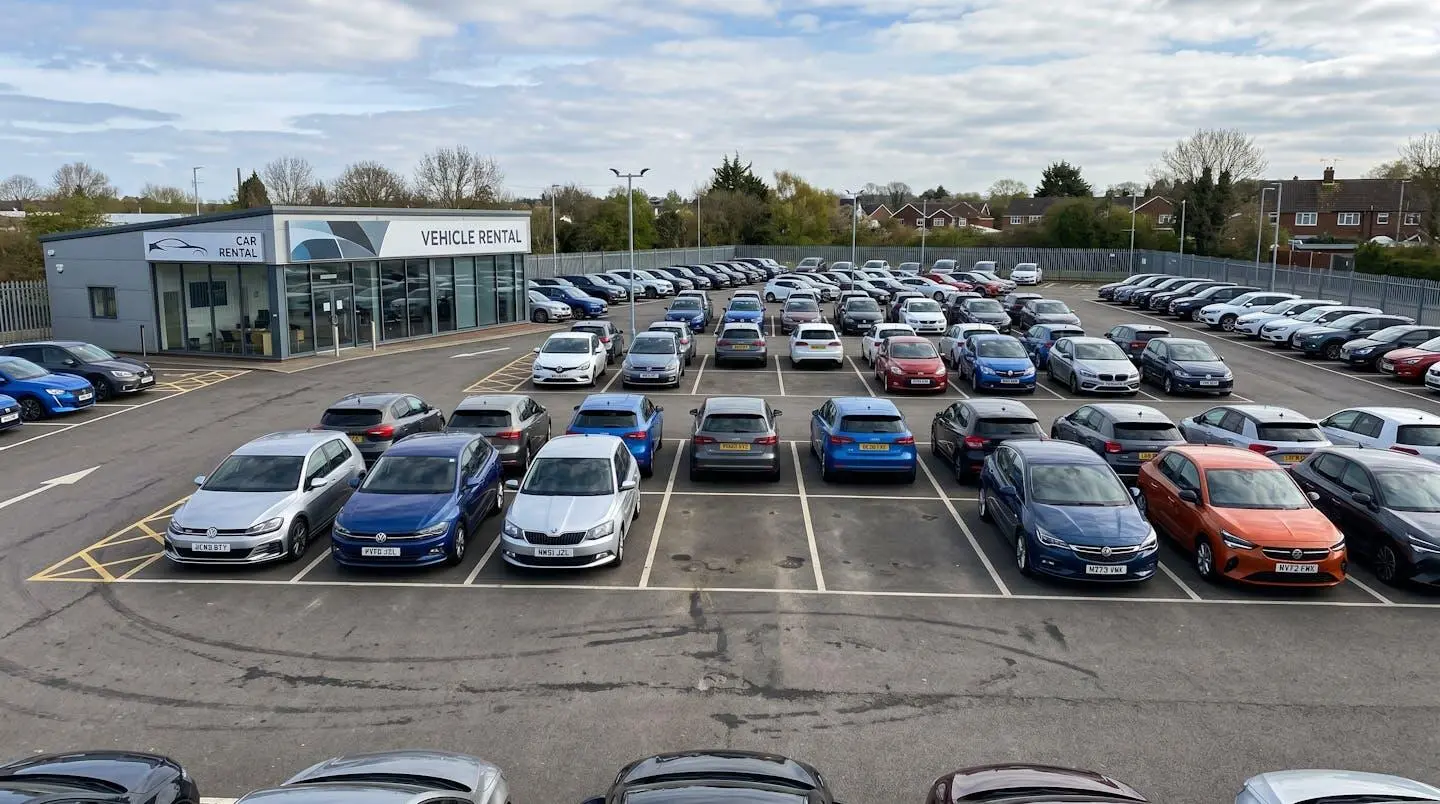
The problem isn’t lack of market interest. Walk through any rental operation during peak season and you’ll encounter the same operational paradox: customers calling to ask about availability for vehicles that show as unavailable online but are actually sitting ready in the lot. The disconnect emerges from a timing gap — the hours between a vehicle’s physical return and its status updating across booking channels. During that window, genuine demand hits a wall of perceived unavailability, then moves to competitors whose systems reflect reality faster.
This « ghost unavailability » compounds when booking processes themselves create hesitation. A customer finds an available vehicle but encounters a multi-step reservation wizard requiring excessive form fields, unclear pricing breakdowns or account creation before confirmation. Each additional click multiplies the probability they’ll drop off before completing the transaction. The availability you worked to display never converts into a confirmed booking, and the vehicle returns to idle status despite being discovered by a ready buyer.
52%
Proportion of travellers who abandon online bookings when the digital experience delivers friction or uncertainty
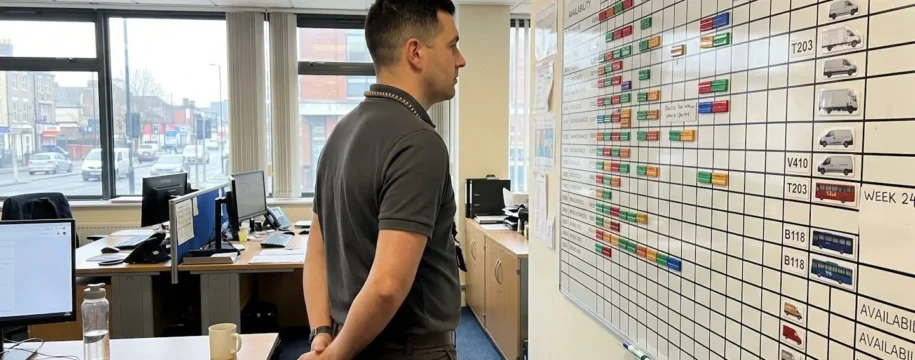
Manual planning systems amplify the delay. Picture the typical check-in scenario: a customer returns a vehicle at 11:00. The desk team processes paperwork, inspects the car and completes their internal close-out procedure. But the planning system update happens later — perhaps during the afternoon admin batch, perhaps only overnight if weekend returns pile up. Meanwhile, that vehicle could fulfil a same-day booking request arriving at 13:00, but your online calendar still marks it unavailable. You’ve lost four hours of potential utilisation simply because the loop between physical availability and digital visibility operates manually rather than in real time.
The revenue impact extends beyond the individual missed booking. Consider a 150-vehicle fleet where manual update delays average five hours. If just 20% of your daily returns could generate a same-day rebooking, that’s 30 opportunities per day. At a conservative 60 £ average daily rate, you’re leaving roughly £1,800 daily on the table — over £650,000 annually — simply because availability information lags behind operational reality. The vehicles exist, the demand exists, but the visibility loop fails to close fast enough to match them.
The three-part mechanism: how availability and bookings reinforce each other
Breaking the idle-capacity trap requires understanding how three operational components interlock to create a reinforcing performance cycle. Rather than treating fleet visibility, booking conversion and system updates as separate functional areas, systematic operators recognise them as interconnected elements of a single mechanism. When one component strengthens, it amplifies the effectiveness of the others, creating compound improvements that individual optimisations cannot deliver in isolation.
Real-time visibility triggers faster customer decisions
Uncertainty is the primary driver of booking abandonment. When a customer searches for vehicle availability and encounters vague responses — « contact us for availability, » « subject to confirmation, » or simply outdated calendars showing yesterday’s status — they face a choice: invest time calling to verify, or move immediately to a competitor whose website displays confident real-time inventory. Market projections tracked by Statista anticipate that by 2030, online channels will contribute 75% of total revenue in the global car rental market, up from current minority share. That structural shift means customers increasingly expect instant digital confirmation without phone calls or email exchanges.
Real-time availability transparency removes decision friction. When your booking platform reflects the actual status of your fleet within minutes of any change — returns processed, bookings confirmed, vehicles moved between locations — customers see truth rather than approximation. They commit faster because confidence replaces doubt. The psychological shift is measurable: precise availability information shortens the typical browse-to-book window from hours or days down to minutes, capturing demand before it evaporates to alternative options or simply defers the decision entirely.
This visibility advantage compounds during high-demand periods. When multiple customers simultaneously search for similar vehicle types, real-time systems allocate inventory accurately, preventing the double-booking conflicts that manual calendars create. Instead of over-promising capacity you don’t have (damaging trust) or under-representing capacity you do have (losing bookings), your digital presence matches operational reality precisely, maximising conversion whilst eliminating fulfilment failures.
Streamlined booking flow converts availability into confirmed reservations
Displaying accurate availability solves only half the equation. The booking process itself determines whether that visibility converts into revenue. Multi-step reservation wizards act as conversion funnels: each additional field, each unnecessary page transition and each unclear pricing element sheds a portion of interested customers before they reach final confirmation. Research tracking digital user behaviour demonstrates that form complexity directly correlates with abandonment — the gap between « I want this vehicle » and « I’ve secured this vehicle » widens with every incremental obstacle.
Systematic approaches prioritise friction elimination. Single-page booking flows, pre-populated customer data for returning users, transparent all-inclusive pricing and one-click payment authorisation reduce the cognitive load and time investment required to complete a reservation. Modern car rental software platforms achieve this through streamlined interfaces that guide customers from search to confirmation in under two minutes, compared to five or more minutes for legacy multi-step processes. That three-minute difference might seem trivial, but conversion data reveals it’s the threshold where customers decide whether to complete or abandon.
Mobile optimisation particularly matters. With smartphone bookings representing an accelerating share of reservations, any booking flow requiring excessive typing, unclear tap targets or awkward navigation on small screens directly suppresses conversion. Operators report that simplifying mobile checkout — reducing required fields from 15 to 7, implementing autofill and consolidating payment onto a single screen — can improve mobile completion rates by 30-40 percentage points, transforming previously wasted visibility into confirmed utilisation.

Instant updates close the loop and multiply opportunities
The mechanism becomes self-reinforcing when booking confirmations trigger immediate availability updates across all channels. Picture the operational sequence: a customer completes a reservation at 10:15 for a vehicle available from 14:00 today. In manual systems, that booking might not update the planning calendar until the afternoon admin batch, leaving the vehicle displayed as available for hours after it’s actually committed. You risk double-booking conflicts, customer service failures and wasted staff time managing allocation errors.
Automated synchronisation eliminates the lag. The moment a booking confirms, the system instantly marks that vehicle unavailable across your website, phone reservation team, partner channels and internal planning board. Simultaneously, when a return processes or a cancellation occurs, that vehicle immediately reappears as available to all channels. This instant feedback creates same-day rebooking opportunities that manual processes cannot capture — a vehicle returned at 11:00 can be discovered, booked and deployed again by 13:00, adding half a day’s revenue that would otherwise vanish into idle time.
The compound effect accelerates over time. Each successful quick-turnaround booking generates operational confidence, encouraging teams to process returns faster knowing the system will immediately monetise the availability. Better data accumulates, revealing patterns in same-day demand that inform dynamic pricing and vehicle positioning strategies. What began as a simple automation of availability updates evolves into a performance flywheel where speed, accuracy and utilisation mutually reinforce across hundreds of daily transactions.
The flywheel effect: Think of the availability-booking loop like a flywheel — initial effort to establish real-time visibility and streamline checkout gets the wheel turning. Each successful booking updates availability instantly, creating new opportunities. As conversion improves, more vehicles shift from idle to booked. That increased activity generates better allocation data, enabling smarter decisions. The wheel spins faster with each rotation.
Quantifying the compounding impact on utilisation rates
Understanding the mechanism intellectually matters less than quantifying its operational impact. Fleet managers operate in a world of concrete KPIs — utilisation percentages, revenue per vehicle, idle hours. Translating the availability-booking loop into measurable performance requires breaking down how improvements in each component compound to shift those baseline metrics. The calculation framework reveals why operators pursuing systematic optimisation consistently outperform those treating visibility, conversion and updates as unrelated administrative tasks.
Performance comparison based on industry benchmarks (manual systems baseline) and systematic fleet management user-reported outcomes (optimised scenario). Data compiled January 2026.
| Performance metric | Manual disconnected systems | Optimised availability-booking loop | Measurable impact |
|---|---|---|---|
| Availability update delay | 4-6 hours post-return | Instant (under 1 minute) | Same-day rebooking enabled |
| Booking abandonment rate | 40-52% | 15-20% | 2-3× more completed reservations |
| Fleet utilisation rate | 60-70% | 75-85% | +15-20 percentage points improvement |
| Same-day turnaround capture | Rare (manual coordination required) | 15-25% of total bookings | Significant revenue recapture from idle windows |
| Check-in and check-out processing time | Manual workflow baseline | Streamlined automated process | Processing time reduced by approximately 50% |
Operators implementing systematic fleet management report concrete gains matching this framework. Users of platforms designed around the availability-booking loop principle — such as those deploying Myrentcar by Hitech Software across their operations — document utilisation improvements of 20% or higher alongside complementary benefits including 33% increases in successfully re-billed fees and the halving of administrative processing time for vehicle movements. These aren’t theoretical projections but measured outcomes from over 500 rental businesses operating across 15 countries, validating the compound effect of closing the operational loop. This validation from real-world implementations provides the foundation for modelling your own fleet’s improvement potential.
Calculating your utilisation ceiling: Model your potential by multiplying three improvement factors. First, reduced abandonment impact — dropping from 45% to 20% abandonment captures 25% more bookings from existing traffic. Second, faster availability refresh — eliminating 4-hour delays likely recovers 10-15% of same-day opportunities currently lost. Third, improved allocation efficiency from real-time visibility — typically 5-8% better vehicle-customer matching. Even conservative estimates across these factors compound to 15-20% total utilisation improvement without adding vehicles.

The financial translation is straightforward. For a 100-vehicle fleet with an average daily rate of £60, improving utilisation from 65% to 80% generates an additional 328500 £ in annual revenue from the same asset base. That’s the power of the compounding loop — extracting more value from existing capacity rather than requiring capital investment in fleet expansion to achieve growth targets.
Implementation priorities: where to start for maximum impact
Recognising the availability-booking mechanism is valuable only if it translates into action. Fleet operators face constant demands on time and resources, making prioritisation essential.
Rather than attempting simultaneous optimisation across all three loop components, systematic implementation focuses effort on the biggest current gap — the constraint delivering the highest immediate return when addressed. Audit your operation against the framework below to identify where intervention delivers maximum utilisation gains fastest.
- Measure current availability update lag time from vehicle return to online calendar refresh
- Map your complete booking journey counting every click and form field from search to confirmation
- Calculate your actual booking abandonment rate by tracking started versus completed reservations across all channels
- Identify missed same-day rebooking opportunities by reviewing vehicles returned before 14:00 that remained idle the rest of the day
- Test real-time synchronisation capability by making a test booking and measuring how quickly the change reflects across website, phone system and planning board
- Prioritise the component showing worst current performance for initial optimisation focus
Whichever component you address first, the loop structure means improvements cascade. Faster availability updates make booking flow optimisation more effective because customers encounter accurate inventory. Streamlined booking processes amplify the value of real-time visibility by converting that transparency into completions rather than abandoned sessions. The reinforcing nature of the mechanism rewards starting anywhere — the key is starting systematically rather than hoping isolated administrative improvements will somehow compound into strategic performance gains. Once you’ve completed your diagnostic audit, several implementation questions typically arise across fleet operations teams navigating the transition from manual to systematic availability management.
Can we improve utilisation without replacing our entire booking system?
Partial improvements are achievable through better manual discipline. However, the full compounding effect requires real-time synchronisation that manual methods cannot sustain at scale. The gap between possible and optimal widens as fleet size grows.
How long before we see measurable utilisation improvements?
Initial gains typically appear within 4-6 weeks as conversion improves and abandonment drops. The compound effect builds over 3-6 months as same-day rebooking opportunities accumulate and teams adapt processes to leverage faster updates.
What return on investment can we expect from fleet management software focused on this loop?
Using the 20% utilisation improvement reported by systematic operators: for a 100-vehicle fleet with £60 daily rate, that represents approximately £328,500 additional annual revenue from better asset utilisation, before accounting for reduced costs and improved fee recovery.
Does this mechanism work for long-term rental and leasing alongside short-term hire?
The loop principles apply across rental durations. Long-term operations benefit from availability visibility preventing mis-allocation and booking flow efficiency reducing sales cycles. Mixed-duration fleets gain advantages from dynamic allocation shifting vehicles between short and long-term inventory.